


Reviewed by Russell Noga, Licensed Insurance Broker — Last updated November 13, 2026
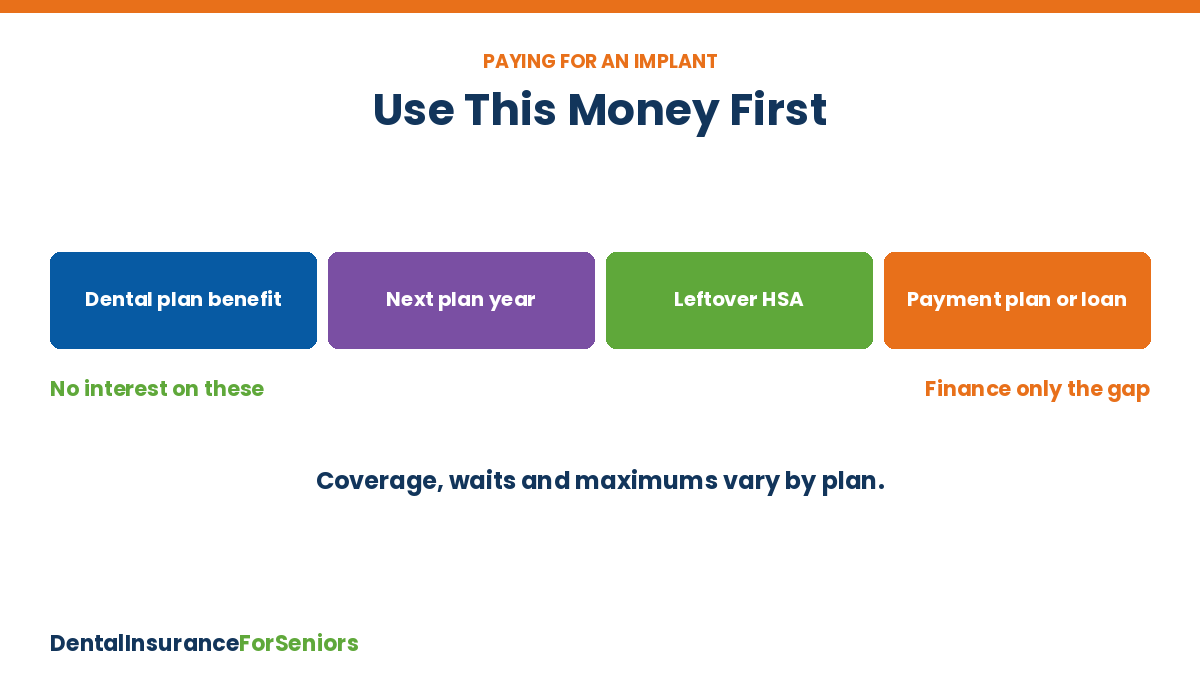
Dental implant financing means spreading an implant bill of about $3,000 to $6,000 per tooth over time, most often through a dentist’s in-house payment plan, a medical credit card or a personal loan. Seniors usually pay less overall by using dental insurance and any leftover HSA money first, then financing only the gap with a fixed rate or a true 0% plan.
2027 by the Numbers
$3,000-$6,000
typical cost of one implant with abutment and crown (MetLife)
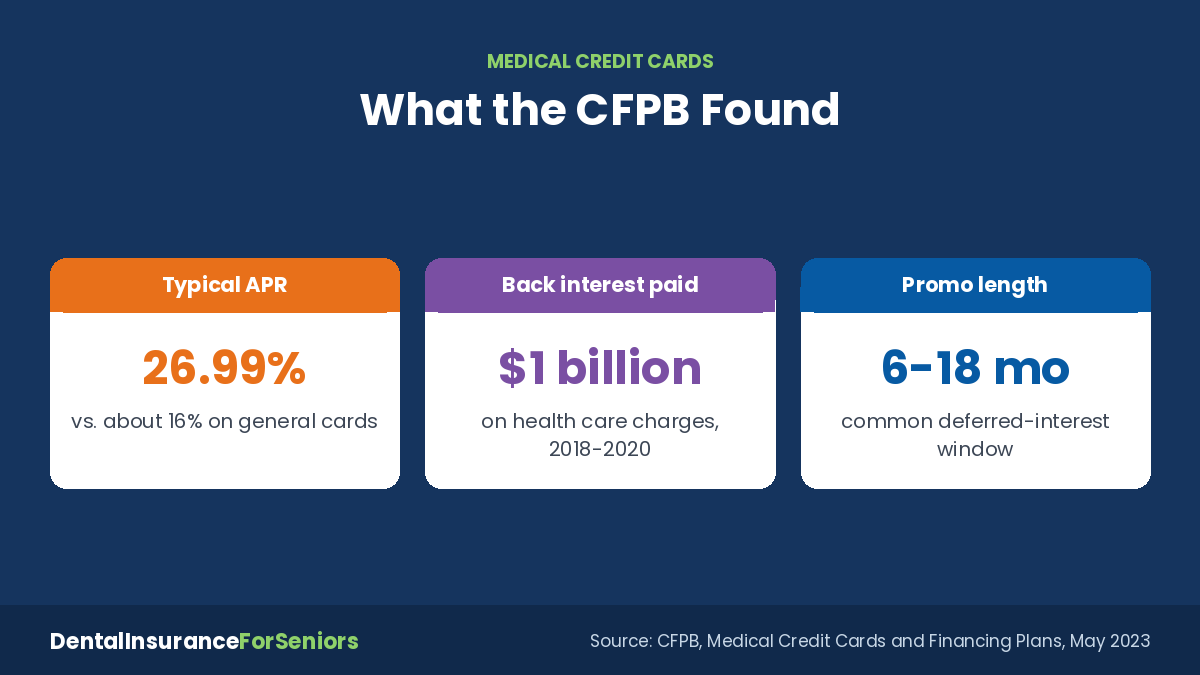
26.99%
APR on a typical medical credit card (CFPB, 2023 report)
$1 billion
deferred interest paid on health care card charges, 2018-2020 (CFPB)
Retirement income arrives in fixed monthly amounts, while an implant quote arrives as one large number. Financing bridges that gap, but a plan that looks free on day one can turn expensive by month thirteen.
This guide covers the payment side only: which money to use first, how each type of credit works, and what to avoid. For price ranges by tooth and add-on, see how much dental implants cost.