


Free Dental Implants for Seniors: Which Routes Are Real and What They Cost

Reviewed by Russell Noga, Licensed Insurance Broker — Last updated November 10, 2026

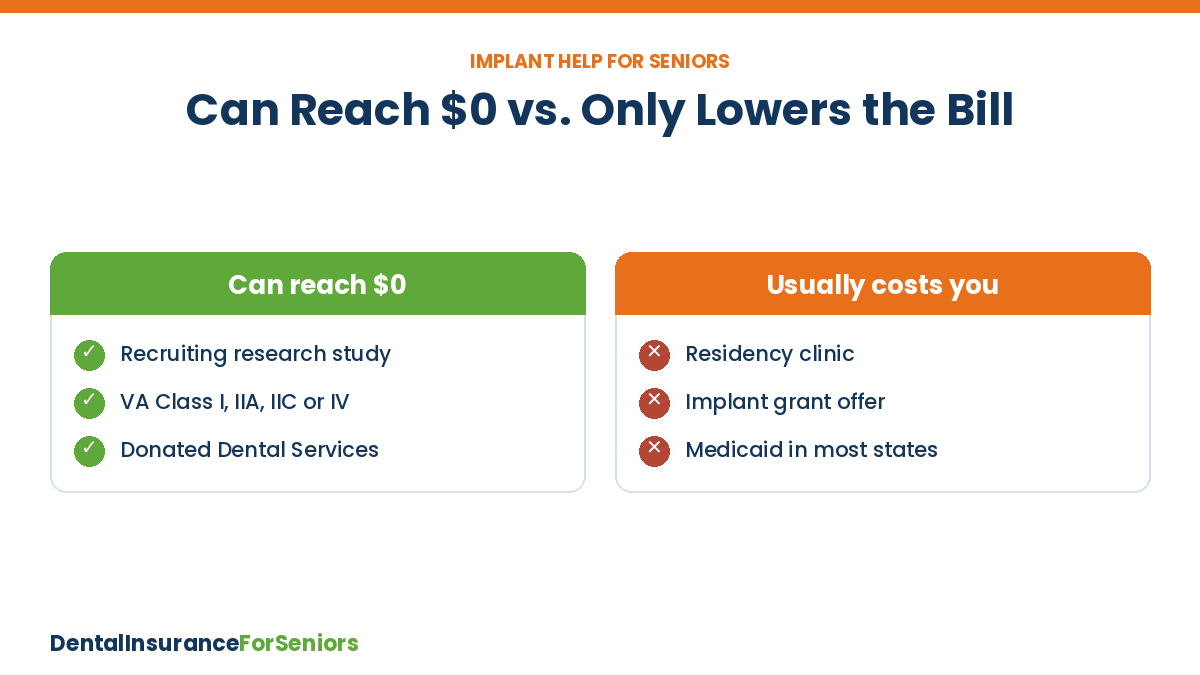
Truly free dental implants for seniors are rare: the realistic $0 routes are a research study that includes implants, VA dental care for veterans in its comprehensive-care classes, and Dental Lifeline Network’s Donated Dental Services when the volunteer dentist chooses to place implants. Residency clinics, Medicaid and “implant grant” offers usually lower the bill rather than erase it, which is why a senior dental plan or discount plan is the common fallback.

2027 by the Numbers

65+

age that by itself meets one Donated Dental Services eligibility test (Dental Lifeline Network)

4

VA dental classes eligible for any needed dental care (VA fact sheet)

7.5%

of adjusted gross income: dental costs above it are tax-deductible if you itemize (IRS)

Ads promising no-cost implants to anyone over 65 target people who just lost work-based dental coverage. The real picture is narrower: a few programs can place implants at no charge, but each has strict rules, long waits or limited slots, and some loud offers are discounts dressed up as gifts.

Below, every implant route is sorted by who qualifies, what you usually pay and how long it takes. Looking for free cleanings, fillings or dentures instead? Start with free dental care for seniors on Medicare.
Compare Senior Dental Plans With Implant Benefits

Why a Fully Paid Implant Is So Hard to Get

Free dental implants for seniors: routes that can reach $0 compared with routes that only reduce the cost

An implant is really three things: a surgical post in the jaw, a connector called an abutment and a lab-made crown, often spread over several months. Donating one means donating surgery, parts and lab work at once, so most programs ration implants tightly or leave them out.

Pain and infection come first. Charity and public programs usually fund extractions, fillings and dentures before an elective tooth replacement.

Your mouth has to qualify too. Implants need enough jawbone and healthy gums, so bone loss or uncontrolled gum disease can rule you out even when income rules are met.

Original Medicare stays out. Parts A and B do not pay for routine implants, and Medigap follows suit. Medicare Advantage dental benefits vary by plan and area.

Senior Dental Insurance Quotes

Call a Licensed Agent Now

Compare dental plans for seniors and people on Medicare from several insurance companies in one call.

☎ 1-855-425-2095

TTY users 711  |  Mon–Fri: 8am–9pm ET

No obligation to enroll

Every Free and Reduced-Cost Implant Route, Side by Side

No single program covers everyone, so the routes are easier to judge side by side.

RouteWho qualifiesTypical cost to youWait or availabilityHow to apply
Research study with implantsAdults who fit a study’s health and bone criteriaOften reduced; some studies cover the implantOnly while a study is recruiting nearbyClinicalTrials.gov; dental school research offices
Postgraduate periodontics or prosthodontics clinicPatients the residents can use as teaching casesReduced fees; rarely freeScreening visit, then a waitlistA dental school’s graduate clinic
Donated Dental ServicesAge 65+, permanently disabled or medically necessary need, and unable to pay$0 for donated care; implants not guaranteedMonths to a year or more; some counties closedDental Lifeline Network online form
VA dental careVeterans in VA dental Classes I, IIA, IIC or IV$0 for needed careThrough your VA medical centerEnroll in VA health care
Medicaid adult dentalLow income and assets; rules set by each stateLow or none if coveredImplants rarely covered; prior approvalState Medicaid agency or plan
Implant grant offersApplicants a participating dentist acceptsPartial; you pay the balanceFast, because it is a sales processOnline funding request

Compiled from Dental Lifeline Network, VA, NIDCR and program materials. Confirm current rules with each program.

Reading the table: Only rows one, three and four can reach $0 for an implant, and each depends on a gatekeeper: a study’s criteria, a volunteer dentist’s plan or a VA eligibility class.

Research Studies and Residency Clinics: The Overlooked Routes

Two quieter routes run through universities, and both reward patience more than low income.

Implant research studies. Universities and implant makers test new posts, grafts and techniques on volunteers. ClinicalTrials.gov lists each study’s health rules, which often include good general health, enough bone and follow-up visits for a year or more. Some cover part or all of the treatment, so read the consent form.

Postgraduate specialty clinics. Many dental schools run graduate programs where licensed dentists training in periodontics or prosthodontics place and restore implants under faculty supervision. Fees are usually below private-office prices, though rarely zero.

Teaching-clinic tradeoffs. Expect a screening exam, longer visits and a clinic that picks cases fitting its training, often simple single-tooth gaps.

Fraud check: The National Institute of Dental and Craniofacial Research states that it does not provide dental or financial assistance for care and does not offer implants or implant trials. Ads, emails or texts claiming an NIH or NIDCR free implant program are likely fraudulent.

Charity, Veteran and Medicaid Help for Implants

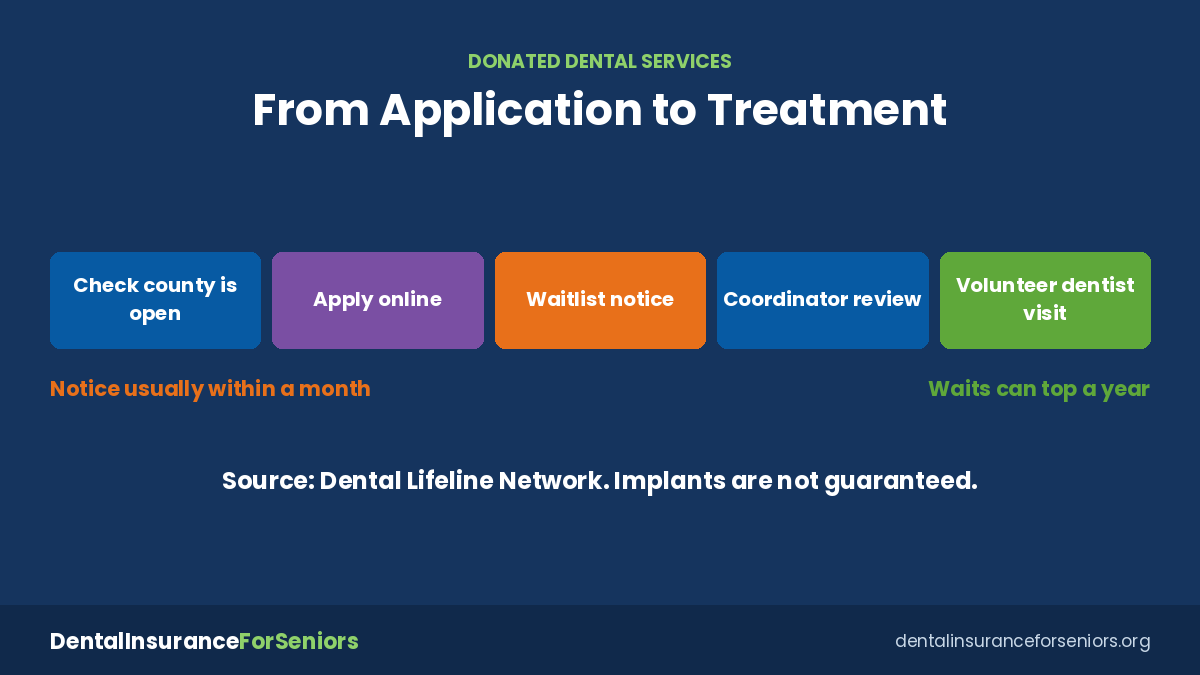
Free dental implants for seniors through Donated Dental Services: application, waitlist, review and volunteer dentist steps

These programs serve older and lower-income adults directly, but each treats implants as the exception.

Donated Dental Services. Dental Lifeline Network accepts people 65 or older, permanently disabled or needing medically necessary care who cannot afford treatment. You must use any dental insurance and Medicaid first, may use the program once, and the volunteer dentist decides the treatment, which may not include implants.

Smiles for Everyone and Smile, Veteran! The Smiles for Everyone Foundation has offered one free implant per patient to a small number of need-based applicants, and the American Academy of Implant Dentistry Foundation’s Smile, Veteran! program helps selected veterans at little to no cost. Both open in limited windows.

VA dental classes. Classes I, IIA, IIC and IV, including veterans rated 100% service-connected disabled and former prisoners of war, can receive any needed dental care. See veterans dental insurance for other options.

Medicaid. Adult dental is optional for states, and most adult programs stop well short of implants. Approval, where possible, usually takes documented medical necessity and prior authorization.

On the charity route, time matters more than paperwork. Dental Lifeline Network waitlists eligible applicants in the order received, usually sends notice within a month, and warns that waits can run a year or more. Final acceptance comes only after the first volunteer dentist visit.

Find & Compare Plans Online

Speak with a licensed insurance agent

1-855-425-2095TTY 711

Mon-Fri: 8am-9pm ET

Implant Grant Offers and Other Red Flags

Search results for implant help are crowded with “dental implant grants.” Programs such as Cosmetic Dentistry Grants describe a free application, a free exam with a participating dentist and a grant paid to the clinic, not to you. Published descriptions call these grants partial, so you still pay the balance. Treat any grant as a discount and compare the quote elsewhere.

1

Get the pre-grant price. A grant only means something if the starting fee matches other local offices.

2

Refuse any fee to apply. Real charities and studies do not charge to be considered.

3

Guard your Social Security number. A pre-screening ad has no reason to ask for it.

4

Ignore “government implant grants.” No federal program pays for an individual senior’s implants.

5

Read financing terms. Some offers pair the discount with a medical credit card or loan that can charge high interest.

Adult children helping a parent can collect two or three written treatment plans, compare totals and make sure nothing gets signed at a first free consultation.

If You End Up Paying: Plans, Discounts and a Tax Break

Most seniors pay for at least part of an implant. Check local prices with our guide to how much dental implants cost, then shrink the number.

Senior dental plans. Some pay toward implants as major care, often around 50%, after waits that commonly run 6 to 12 months or more, with annual maximums often $1,000 to $2,000. Compare dental insurance that covers implants for seniors.

Discount plans. Not insurance: a yearly fee buys reduced prices at participating dentists, usually with no wait. See dental discount plans for implant procedures.

Medicare Advantage. Some plans include implant benefits; limits and networks vary by plan and area. Read does Medicare Advantage cover dental implants.

Tax deduction. If you itemize, unreimbursed medical and dental costs above 7.5% of adjusted gross income are deductible under IRS rules.

Timing tip: Free programs and paid plans are not either-or. A plan’s waiting period can run while you sit on a charity or study waitlist, and Donated Dental Services expects other coverage to be used first. Full-arch options such as All-on-4 are a separate budget question.

Bottom Line

Free dental implants for seniors come through only a few narrow doors: a recruiting study, VA comprehensive dental care, or donated care whose dentist agrees to implants. Apply where you qualify, treat grant offers as discounts, and start a plan’s waiting period at the same time.

See implant-friendly dental plans and rates in your ZIP code

Free Dental Implants for Seniors — Frequently Asked Questions

➤ Is there a government program that gives seniors free dental implants?

No federal program pays for an individual senior’s implants, and NIDCR says it offers no implants or implant trials. Government help comes only through VA dental care for eligible veterans or state Medicaid where an implant is approved.

➤ Does Donated Dental Services place implants?

Sometimes, but it is not promised. The volunteer dentist decides the treatment, and implants, sedation and complex care may not be provided.

➤ How do I find a dental implant study near me?

Search ClinicalTrials.gov for recruiting dental implant studies and ask nearby dental schools’ research offices. Expect health screening, bone checks and follow-up visits.

➤ Are dental implant grants legitimate?

Some are real discount arrangements with participating dentists, but they are partial, so you still pay a balance. Never pay to apply, and compare the full quote.

➤ Can a postgraduate dental clinic do my implant for free?

Rarely. Graduate periodontics and prosthodontics clinics usually charge reduced fees and choose cases that suit their training.

➤ Can my adult child apply for implant help on my behalf?

A family member can usually help gather documents, compare plans and track waitlists. The patient still needs to attend screenings and consent to treatment.

➤ Will Medicaid pay for an implant if I also have Medicare?

Only if your state’s adult Medicaid dental benefit allows it, which is uncommon, and usually only with documented medical necessity and prior approval.

➤ Are implant costs tax-deductible for retirees?

They can be. If you itemize, unreimbursed dental and medical costs above 7.5% of adjusted gross income are deductible. A tax professional can confirm how it applies.

Senior Dental Insurance Quotes

Call a Licensed Agent Now

Compare dental plans for seniors and people on Medicare from several insurance companies in one call.

☎ 1-855-425-2095

TTY users 711  |  Mon–Fri: 8am–9pm ET

No obligation to enroll

Find & Compare Plans Online

Speak with a licensed insurance agent

1-855-425-2095TTY 711

Mon-Fri: 8am-9pm ET

ZRN Health & Financial Services, LLC, a Texas limited liability company