



Reviewed by Russell Noga, Licensed Insurance Broker — Last updated November 14, 2026
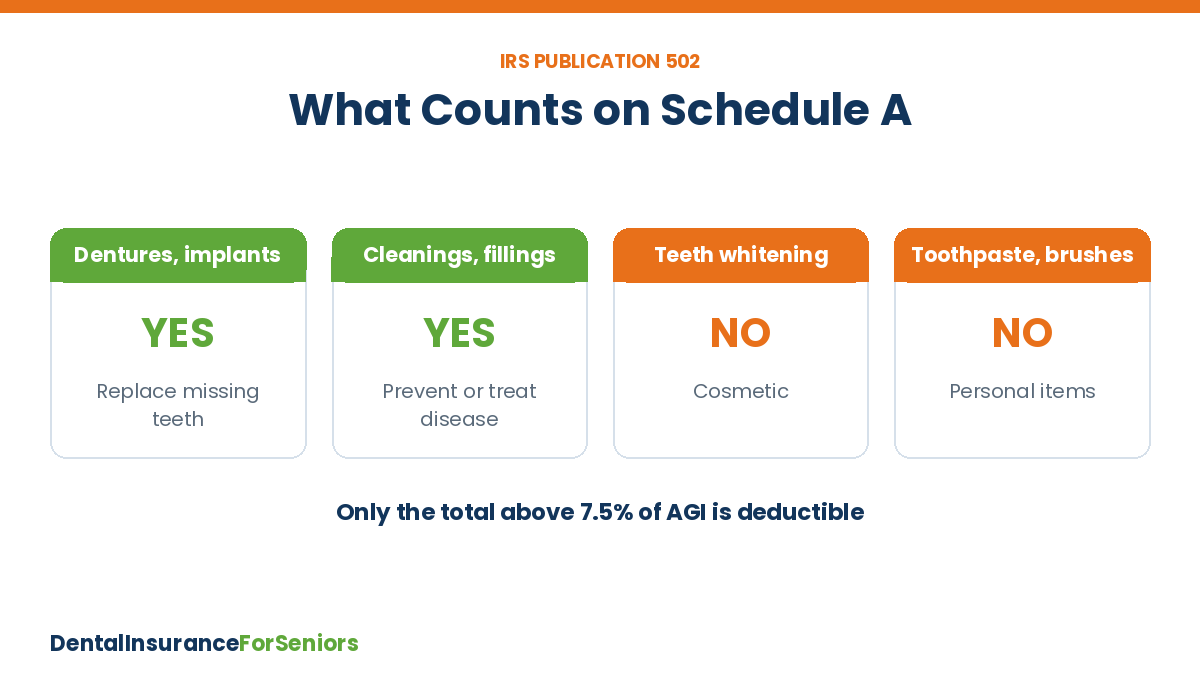
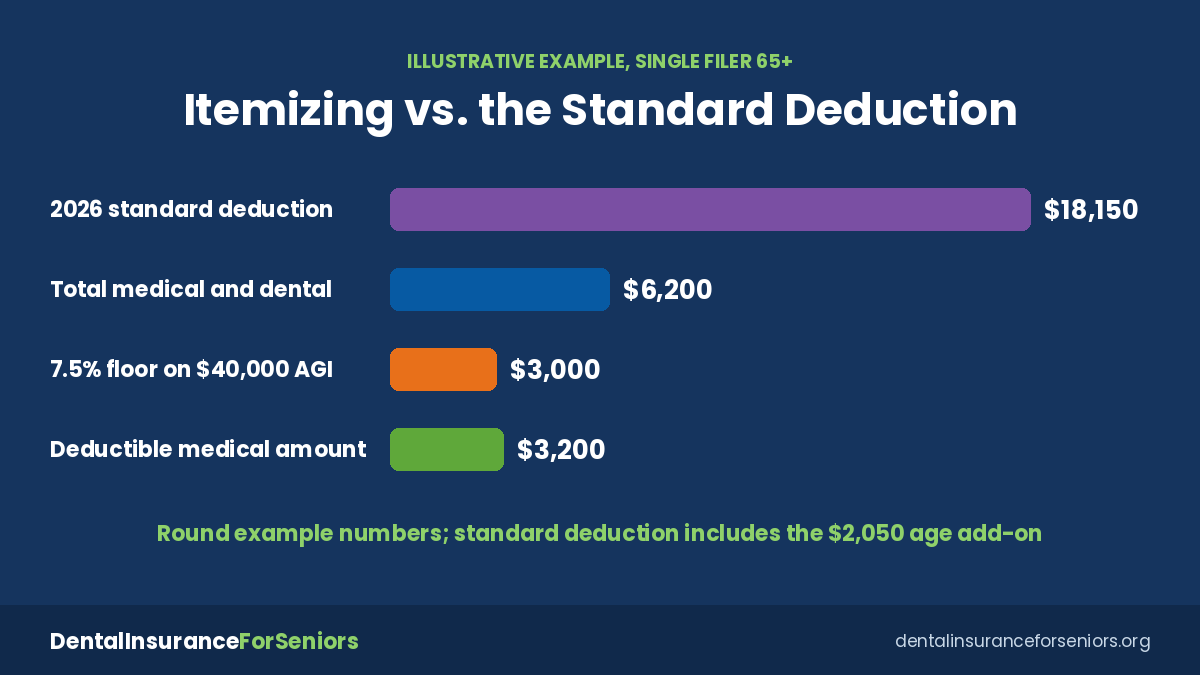
Yes, dental expenses are tax deductible when they treat or prevent dental disease, including dentures, fillings, extractions and cleanings, and so are dental insurance premiums you pay with after-tax money. The catch is that you must itemize on Schedule A, and only the part of your total medical and dental costs above 7.5% of your adjusted gross income counts.
2027 by the Numbers
7.5%
of adjusted gross income your medical costs must pass first (IRS Pub. 502)
$2,050
extra 2026 standard deduction for a single filer 65+ (IRS)
$6,000
new senior deduction per person 65+, tax years 2025-2028 (IRS)
$202.90
2026 standard Medicare Part B monthly premium (CMS)
A new set of dentures or a mouth full of fillings can cost more than a month of Social Security. Retirees, and the adult children who help with their paperwork, often wonder whether the IRS gives any of that money back.
It can, but the rules favor people with large bills in one year. Typical price ranges are in how much dentures cost.