


Dental Bone Graft Cost for Seniors: Prices by Graft Type

Reviewed by Russell Noga, Licensed Insurance Broker — Last updated November 4, 2026

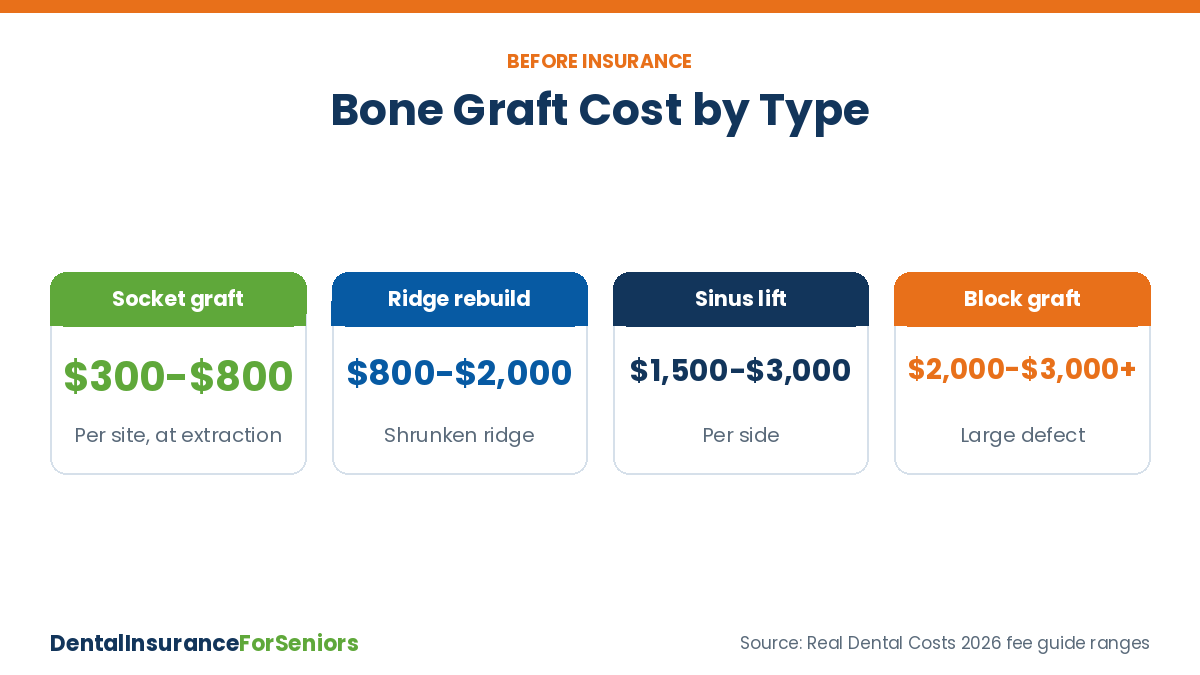
A dental bone graft usually costs about $300 to $800 for a socket graft after an extraction, $800 to $2,000 for ridge augmentation, $1,500 to $3,000 per side for a sinus lift, and $2,000 to $3,000 or more for a block graft, before insurance. Grafts using your own bone can run higher, and a senior dental plan pays only up to its yearly maximum, if it covers the graft at all.

2027 by the Numbers

$300-$800

typical socket graft after an extraction (Real Dental Costs, 2026)

$1,045

national average fee for code D7953, a socket graft (Pearl, ADA fee survey data)

$1,500-$3,000

typical sinus lift, per side (Real Dental Costs, 2026)

A bone graft is often the surprise line on an implant quote. The dentist says the jaw is too thin to hold a post, and the bill grows by hundreds or a few thousand dollars, plus months of healing.

This page covers the price tag: what each graft costs, why longtime denture wearers often need one, and what you will likely pay with and without coverage. For whether a plan pays at all, see whether a bone graft is covered by dental insurance.
Compare Senior Dental Plans That Help With Major Work

Bone Graft Prices by Type, With the Code on Your Quote

Dental bone graft cost by type: socket graft, ridge augmentation, sinus lift and block graft price ranges

Graft prices depend on how much bone is missing, where, and what material fills the gap. Each graft type has its own CDT procedure code, and that code is what your plan uses to decide what to pay.

Graft typeWhat it doesTypical costCode you may see
Socket graft (socket preservation)Fills the hole right after a tooth is pulledAbout $300 to $800 per siteD7953
Ridge augmentationRebuilds a ridge that has already shrunkAbout $800 to $2,000D7950
Sinus liftAdds bone under the sinus for upper back teethAbout $1,500 to $3,000 per sideD7951 or D7952
Block graftMoves a solid piece of bone into a large defectAbout $2,000 to $3,000+D7950
Graft placed with the implantSmall fill done during implant surgeryVaries; ask for the line feeD6104

Source: Real Dental Costs 2026 ranges, before insurance. Pearl’s ADA fee survey data puts the national average for D7953 near $1,045, so local fees may run higher.

Donor bone, cow bone and synthetic mineral are the lower-cost materials. Using your own bone can push a graft to about $2,000 to $5,000 or more, mostly because it adds a second surgical site.

Senior Dental Insurance Quotes

Call a Licensed Agent Now

Compare dental plans for seniors and people on Medicare from several insurance companies in one call.

☎ 1-855-425-2095

TTY users 711  |  Mon–Fri: 8am–9pm ET

No obligation to enroll

Why Years in Dentures Often Means a Graft Before Implants

Tooth roots keep the jawbone in use. Once a tooth is gone, the bone shrinks, and studies of untreated sockets have found the ridge can lose up to about half its width in the first year. Dentures rest on the gums, so they do not stop it.

Thin ridge. After years without teeth, the ridge may be too narrow for a post. That usually means ridge augmentation or a block graft.

Low upper back jaw. When back teeth are gone, the sinus can sit close to the gum line. An upper molar implant may need a sinus lift first.

Healing time. A larger graft often heals for several months before the implant goes in, so the job can span two plan years.

Our Math: What You Pay for a Graft Plus One Implant

Plans that cover grafts usually treat them as major care, often about 50% after a waiting period, under one yearly maximum. We ran each graft type with a $4,000 implant and crown, 50% coverage and a $1,500 annual maximum.

Graft (midpoint price)Graft + implant totalYou pay, all in one plan yearYou pay, graft this year and implant next year
Socket graft ($550)$4,550$3,050$2,775
Ridge augmentation ($1,400)$5,400$3,900$3,200
Sinus lift, one side ($2,250)$6,250$4,750$3,625
Block graft ($2,500)$6,500$5,000$3,750
No coverageSame totalsFull billFull bill

Illustration only, computed by us from Real Dental Costs midpoints; no deductible or premiums. Same year: 50%, capped at $1,500. Split: 50% of the graft in year one, then 50% of $4,000 capped at $1,500.

In one year the $1,500 cap is hit before the 50% rate matters, so the graft adds almost dollar for dollar to your share. Since grafts heal for months anyway, splitting the stages across plan years recovered up to $1,250 in these examples. For implant-only prices, see how much dental implants cost.

Socket Graft Now or Rebuilt Ridge Later?

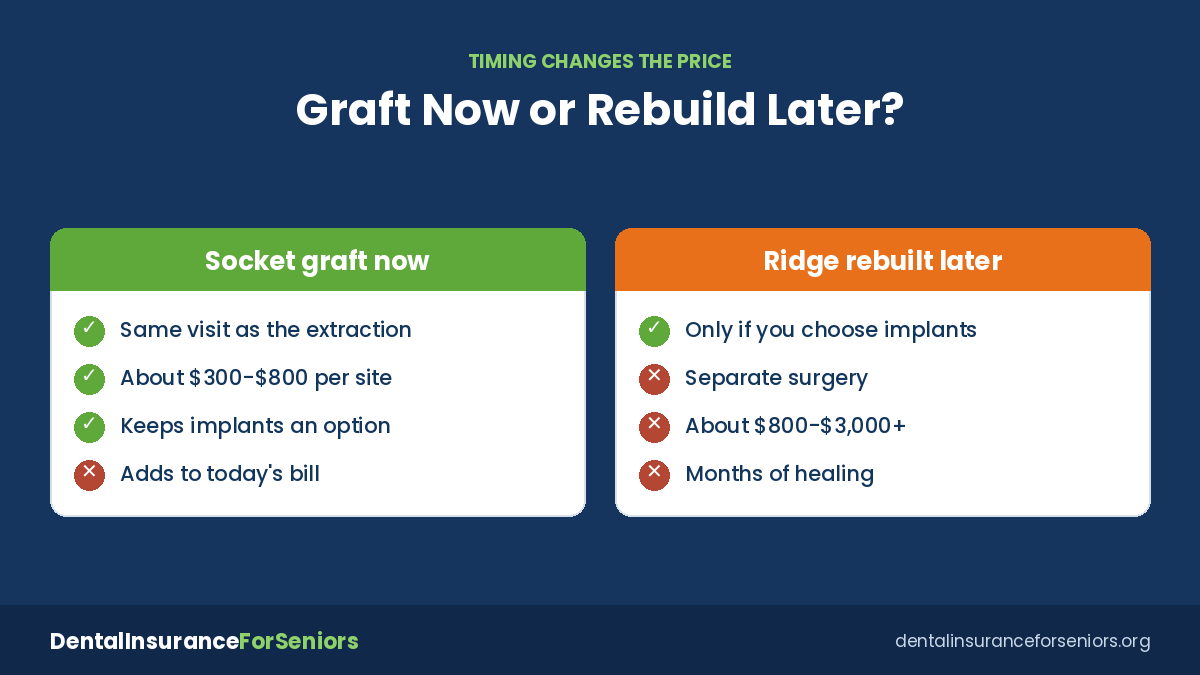
Dental bone graft cost of a socket graft at extraction compared with rebuilding the ridge years later

Having teeth pulled for a denture but may want implants someday? A socket graft at the extraction visit is small. Rebuilding the same spot after years of shrinking is a bigger surgery.

Socket graft at extraction. Often about $300 to $800 per site, same visit. Real Dental Costs notes plans most often pay toward this graft when billed with the extraction.

Ridge rebuilt years later. Often about $800 to $3,000 or more, with its own surgery and healing. Plans often deny grafts done only to prepare an implant site.

Ask before surgery: Get a written plan listing each CDT code and fee, then request a pre-treatment estimate. A plan that excludes implants may also refuse the graft for one. See insurance coverage for bone grafting procedures.

Find & Compare Plans Online

Speak with a licensed insurance agent

1-855-425-2095TTY 711

Mon-Fri: 8am-9pm ET

Medicare and Medicare Advantage: Who Pays for a Graft

Original Medicare does not pay for routine dental care, including grafts for dentures or implants. Its dental exceptions are narrow and tied to covered medical care, such as exams before an organ transplant or heart valve surgery, or care linked to head and neck cancer treatment.

The one graft-type exception. Original Medicare may pay to rebuild a dental ridge done at the same time as surgery to remove a tumor. A graft for an implant after normal tooth loss does not qualify.

Medicare Advantage dental. Most Medicare Advantage plans include some dental benefit, but coverage varies by plan and area. Many set a low yearly dollar limit or exclude grafts.

On a Medicare Advantage plan, check the Evidence of Coverage for oral surgery and implant rules, the yearly dental limit and network rules. Benefits can change each January, so read the Annual Notice of Change every fall.

Paying for a Bone Graft on a Fixed Income

1

Price the graft separately. Ask what the graft alone costs and whether a lower-cost material would work.

2

Check waiting periods before you buy a plan. Major services often wait six to 12 months on new senior dental plans. See dental implant insurance waiting periods.

3

Look at a discount plan for the gap. Discount plans are not insurance, but member dentists take reduced fees, often advertised at about 10% to 60% off, with no yearly maximum. Compare dental discount plans for implant procedures.

4

Try a dental school. Supervised students and residents often charge less, though visits take longer.

5

Use HSA money you already saved. You cannot add to an HSA once on Medicare, but money already saved can still pay for dental surgery tax free.

Financing caution: Office payment plans and medical credit cards spread the cost out, but some promotional plans charge all deferred interest if the balance is not paid by the end date.

Bottom Line

Most bone grafts cost from a few hundred dollars for a socket graft to several thousand for a sinus lift or block graft. A yearly maximum near $1,500 is used up fast once an implant is added, so split stages across plan years, fill the gap with a discount plan, and get a pre-treatment estimate first.

See senior dental plans & rates for your ZIP code

Dental Bone Graft Cost — Frequently Asked Questions

➤ What is the cheapest kind of dental bone graft?

A socket graft placed right after an extraction, often about $300 to $800 per site. Some fee data puts the national average closer to $1,000.

➤ How much does a sinus lift cost?

Often about $1,500 to $3,000 per side before insurance. The lateral window approach usually costs more than the smaller crestal approach.

➤ Why does a graft using my own bone cost more?

Taking bone from your chin or jaw adds a second surgical site and more healing, which can push the cost to about $2,000 to $5,000 or more.

➤ I have worn dentures for 15 years. Will I need a graft for implants?

Many longtime denture wearers do, because the ridge keeps shrinking after teeth are lost. A 3D scan shows whether you have enough bone.

➤ Is the graft priced separately from the implant?

Usually yes. It has its own code and fee, so ask for a quote listing the graft, post, abutment and crown.

➤ Can I have the graft and implant in different plan years?

Often yes, since many grafts heal for months before the implant goes in. Each plan year’s maximum then pays toward a different stage.

➤ Will Medicare pay for a bone graft before dentures?

No. Original Medicare does not pay for grafts to prepare for dentures or implants. Some Medicare Advantage plans may help, but coverage varies by plan and area.

➤ Should I get a socket graft if I am only getting dentures?

It is often optional for a denture, but it can preserve bone if you may want implants later. Ask what it adds to today’s bill.

Senior Dental Insurance Quotes

Call a Licensed Agent Now

Compare dental plans for seniors and people on Medicare from several insurance companies in one call.

☎ 1-855-425-2095

TTY users 711  |  Mon–Fri: 8am–9pm ET

No obligation to enroll

Find & Compare Plans Online

Speak with a licensed insurance agent

1-855-425-2095TTY 711

Mon-Fri: 8am-9pm ET

ZRN Health & Financial Services, LLC, a Texas limited liability company