Aetna Dental Insurance for Seniors

Aetna dental insurance for seniors can come through a standalone dental plan or as part of certain Medicare Advantage plans, but the best fit depends on where you live, the dentists you prefer, and the care you expect to need. Coverage, premiums, annual limits, waiting periods, and network rules can vary by plan and county.

Before enrolling, compare how each option handles routine cleanings and exams alongside fillings, crowns, dentures, and other restorative work. Looking beyond the monthly premium can help you find a plan that supports both your budget and your dental priorities. For more information, read our other articles on the topic, such as Full Coverage Dental Insurance With No Waiting Period for Seniors.

Key Takeaways

  • Aetna dental options may include standalone policies, Medicare Advantage benefits, or retiree plans; availability varies by ZIP code.
  • Original Medicare and Medigap generally do not cover routine dental care, including cleanings, fillings, crowns, or dentures.
  • Compare total yearly costs, not just premiums, including deductibles, coinsurance, waiting periods, annual maximums, and exclusions.
  • Preventive care often receives stronger coverage than crowns, dentures, implants, periodontal treatment, and other major services.
  • Confirm your dentist participates in your exact plan and network; “accepts Aetna” does not necessarily mean in-network.
  • Request a pre-treatment estimate for major work and verify frequency limits, replacement rules, material allowances, and authorization requirements.

Compare plans and enroll online

Aetna Dental Insurance for Seniors, What May Be Available Near You

For older adults comparing dental coverage, the right fit often depends less on a familiar insurer name and more on the plan type, local network, and the care you expect to need. Aetna dental insurance for seniors may be offered through stand-alone dental policies, Medicare Advantage plans that include dental benefits, or employer and retiree arrangements.

Availability and benefit design can vary by ZIP code, so it is worth reviewing the options actually sold in your area rather than relying on national advertisements or a plan a friend has elsewhere.

When reviewing Aetna senior dental plans, start with the basics: preventive coverage, annual benefit maximums, waiting periods, deductibles, and the share you would pay for fillings, crowns, dentures, implants, or periodontal treatment. Cleanings and exams may receive stronger coverage than major restorative work, particularly during a plan’s first year. That distinction matters for retirees who are replacing older dental work or managing ongoing gum care, not simply scheduling routine visits.

Provider access deserves equal attention. Ask your current dentist whether they participate in the specific Aetna dental plans under consideration, not merely whether they accept Aetna. Network participation can differ across products, and an out-of-network visit may mean higher costs, more paperwork, or a lower reimbursement amount. If keeping a longtime dentist is important, confirm participation before enrolling.

Medicare is another common source of confusion. Original Medicare generally does not cover routine dental care, but some Medicare Advantage plans may include limited or more comprehensive dental benefits.

Those benefits can have separate provider networks, annual allowances, service limits, and authorization rules. A stand-alone dental policy may offer a different level of flexibility, though it also adds a separate premium.

A practical comparison looks beyond the monthly price. Estimate your likely care for the coming year, check nearby in-network dentists, and read the evidence of coverage or policy details for exclusions and limits. For seniors with predictable preventive needs, a simpler plan may be sufficient; for those anticipating crowns, dentures, or other major work, the benefit schedule and waiting period may carry far more weight than the premium alone.

Standalone Dental Plans and Aetna Medicare Advantage Dental Benefits

Dental care is one of Medicare’s most persistent coverage gaps, particularly for people who want help with preventive visits, restorative work, or dentures. A standalone policy can add dental benefits to Original Medicare, while some Aetna Medicare Advantage plans include routine dental coverage within their medical plan.

The practical question is not simply whether a plan offers dental benefits, but which services are covered, how much the plan pays, and whether local dentists participate. Aetna Medicare Advantage options, like other Medicare Advantage plans, can differ substantially by county and plan design.

Where Original Medicare and Medigap Leave Gaps in Dental Coverage

Original Medicare generally does not pay for routine dental coverage. Cleanings, exams, X-rays, fillings, crowns, bridges, dentures, and most extractions are ordinarily excluded, even when those services are important to overall health and oral health. Medicare may cover limited dental-related care when it is integral to a covered medical procedure, such as an inpatient hospital service or a dental examination needed before certain surgeries, but these are narrow exceptions, not a routine dental benefit.

Medigap policies help pay certain out-of-pocket costs left by Original Medicare, including deductibles and coinsurance for covered medical services. They do not create coverage for services Medicare excludes. That means a person with Original Medicare and a supplement may still pay the full cost of regular dental visits unless they purchase a separate dental policy or another arrangement.

A standalone plan can be a sensible fit for someone who wants to keep Original Medicare and broad provider access while budgeting for preventive care and selected major services. Before enrolling, look beyond the monthly premium. Review waiting periods, annual benefit maximums, deductibles, network rules, reimbursement levels, and exclusions for implants or other higher-cost treatment.

Alternatively, some Aetna Medicare Advantage plans package medical, prescription drug, vision, hearing, and dental features together. Coverage can range from preventive-only services to allowances or cost sharing for comprehensive work. Because Aetna Medicare offerings and other Medicare plans vary by location, confirm the evidence of coverage and check whether your dentist is in network before making a decision.

Coverage OptionRoutine Dental CoverageWhat to Review Before Choosing
Original MedicareGenerally does not cover routine services such as cleanings, exams, X-rays, fillings, crowns, bridges, dentures, and most extractions. Limited dental-related care may be covered when integral to a covered medical procedure.Understand the narrow medical exceptions and expect to pay routine dental costs out of pocket.
Original Medicare with MedigapMedigap helps with certain deductibles and coinsurance for Medicare-covered medical services, but does not add coverage for routine dental services Medicare excludes.Consider whether separate dental coverage is needed for regular visits and dental treatment.
Standalone dental planMay help budget for preventive care and selected major services while allowing you to keep Original Medicare and broad provider access.Review premiums, waiting periods, annual benefit maximums, deductibles, network rules, reimbursement levels, and exclusions for implants or other higher-cost treatment.
Aetna Medicare Advantage planMay include dental features ranging from preventive-only services to allowances or cost sharing for more comprehensive work.Confirm the evidence of coverage, local plan availability, dental benefits, exclusions, and whether your dentist is in network.

Choose Coverage Around Your Dental Needs and Local Options

What Aetna Plans May Cover for Preventive and Restorative Dental Care

Aetna plans can help make routine oral care and larger restorative needs more manageable, but benefits vary considerably by policy, network and location. Preventive dental benefits often emphasize regular maintenance, while more extensive dental services may involve deductibles, waiting periods, annual maximums or coinsurance. Before scheduling treatment, review your plan documents and ask the dental office to confirm what is covered, including any limits on frequency or the materials used.

Preventive Visits, Exams and Routine Dental Services

For many members, the most useful dental benefits are the ones that support consistent care before a small concern becomes a costly repair. A preventive visit commonly includes an examination, professional cleaning and, when clinically appropriate, X-rays. These appointments allow a dentist to monitor changes in the teeth and gums, spot early decay, check existing restorations and discuss habits that may affect oral and overall health.

Coverage is often structured around a set schedule. Key timing details to confirm include:

  • How often cleanings are covered during the calendar year
  • The interval for exams, bitewing X-rays and full-mouth imaging
  • Age and plan rules for children’s fluoride treatments or sealants
  • Whether a service received ahead of schedule becomes an out-of-pocket expense

A plan may cover cleanings twice each calendar year, while exams, bitewing X-rays and full-mouth imaging can follow different intervals. The exact allowance matters: a service received ahead of the plan’s stated frequency may become an out-of-pocket expense even when it is otherwise eligible. Children’s dental care may also include fluoride treatments or sealants, subject to age and plan rules.

Using an in-network dentist can make the process more predictable. Network offices generally accept negotiated rates and can submit claims directly, helping patients see an estimate before care begins. Out-of-network treatment may still be available under some plans, but reimbursement can be lower and the patient may be responsible for the difference between the office fee and the plan’s allowed amount.

It is worth asking the office to verify benefits for each planned service, rather than assuming a cleaning, exam or X-ray is fully paid. Verification is an estimate, not a guarantee, but it gives patients a clearer view of likely costs and helps them keep preventive care on track.

Fillings, Crowns, Dentures, Implants and Periodontal Care

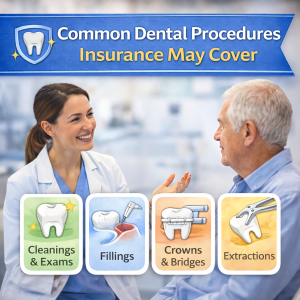
Restorative coverage addresses treatment needed to repair or replace damaged or missing teeth. Depending on the policy, dental insurance may contribute toward fillings, root canal treatment, extractions, crowns, bridges, dentures and periodontal care. These services are commonly covered at a lower percentage than preventive appointments, and annual benefit maximums can become especially relevant when several procedures are recommended in the same year.

A filling may be covered after decay is diagnosed, but a crown can require additional review because plans often apply replacement limits or pay according to a standard material allowance. If a patient selects a higher-cost material, such as porcelain in a situation where the plan allows a base-metal crown, the additional charge may remain the patient’s responsibility. Pre-treatment estimates are particularly helpful for multi-step work.

Dentures and bridges are frequently subject to replacement intervals, so it is important to check both the date of a prior appliance and the reason for the new recommendation. Periodontal treatment, including deep cleaning and gum therapy, may be categorized separately from routine cleanings. A dentist’s clinical notes and X-rays can be important when the insurer reviews medical necessity.

Implants deserve a careful conversation before treatment starts. Some plans exclude implants entirely, while others offer limited coverage for certain components or an alternative benefit based on what a bridge or denture would have cost. For senior dental patients managing bone loss, missing teeth or long-standing gum disease, coordinating the treatment plan with benefit timing can reduce surprises.

Ask for a written estimate that separates the surgical, restorative and laboratory portions of care, then confirm coverage directly with Aetna.

How Dental Plan Costs Work Beyond the Premium

The monthly premium is the easiest number to compare, but it rarely tells the whole story of what dental coverage will cost over a year. A plan with a lower premium may leave you paying more at the appointment, while a higher-premium option may make routine care feel more predictable. The useful comparison is the total amount you are likely to spend: premiums, deductibles, copays or coinsurance, and any treatment your plan does not cover.

When comparing plans, focus on:

  • What you pay each month in premiums
  • Your deductible, copays or coinsurance
  • What preventive and restorative care is covered
  • The annual maximum and any waiting period
  • Whether your dentist is in the plan’s network

Start with the care you expect to need. Preventive visits such as exams, cleanings and X-rays are often covered at a higher level than fillings, crowns, root canals or dentures. That distinction matters.

If you mainly want help staying current with checkups, a leaner plan may suit your budget. If you have postponed treatment or anticipate restorative work, look closely at the share of those expenses you would still pay after coverage applies.

The annual maximum deserves particular attention. This is generally the most a dental plan will pay toward covered services during a benefit year; it is not a cap on what a dentist may charge or on the care you can receive.

Once the plan has paid that maximum amount, you are responsible for additional covered-treatment costs for the rest of the year. For someone planning a crown, bridge or several fillings, a modest annual maximum can change the real value of a plan quickly.

Also check for a waiting period. Some plans cover preventive care right away but require waiting before they contribute to basic or major services. Waiting requirements can be especially important when treatment is already recommended: enrolling today does not necessarily mean a filling or crown will be covered next week.

Review whether prior comparable coverage can reduce the waiting period, and confirm the plan’s rules before scheduling care around an expected benefit.

Finally, consider the dentist’s network and the plan’s fee schedule. An in-network office can make your out-of-pocket amount clearer because negotiated fees shape what you owe. Out-of-network care may still receive benefits, but the difference between the dentist’s charge and the plan’s allowed amount can become your expense.

Reading the benefit summary with your likely care in mind is the clearest way to judge cost beyond the premium.

Find & Compare Plans Online

Speak with a licensed insurance agent

1-855-425-2095TTY 711

Mon-Fri: 8am-9pm ET

How to Confirm Your Dentist and Dental Provider Network

Before booking an appointment, confirm that your dentist participates in your specific dental plan, not simply that the office accepts your insurance. Those phrases can mean very different things. A dental provider may bill your plan as an out-of-network service, while an in-network office has agreed to the plan’s contracted fees.

That distinction can affect both what you pay at the visit and whether you face a balance after your claim is processed.

Start with your insurer’s online directory, using the exact plan name shown on your ID card. Search by ZIP code, specialty, office location, and provider name, then note the dentist’s network designation. Directories are useful, but they are not always current; practices can join or leave networks, and a dentist may participate in one version of a plan but not another.

Treat the listing as a strong first check rather than the final answer.

Next, call the dental office and ask the billing team to verify participation for your plan and network. Have your member ID, group number, and the full plan name ready. Ask whether the individual dentist you will see, not just the practice, is in network, and whether the office can provide a benefit estimate for the treatment you expect to receive. This matters especially in multi-dentist practices, where network status can vary among clinicians.

For the most reliable confirmation, contact member services using the number on the back of your insurance card. Ask them to verify the dentist’s network status, the office address, and the effective date of participation.

If you are scheduling anything beyond a routine exam or cleaning, ask about deductibles, annual maximums, waiting periods, prior authorization, and coverage limits for the procedure. Record the date of your call and the representative’s name or reference number.

Finally, check again before major treatment begins. A quick confirmation can prevent an unwelcome surprise if your coverage changes, your dentist’s contract ends, or your planned procedure requires a referral or pre-treatment estimate. A few minutes of verification gives you a clearer view of your benefits and a better basis for choosing care.

Verify Your Dental Network

  • Use your insurer’s directory and search with the exact plan name listed on your insurance card.
  • Confirm the individual dentist’s network status, not merely whether the practice accepts your insurance.
  • Call the office billing team with your member ID, group number, and plan name available.
  • Ask whether the office can provide a benefit estimate for your expected treatment.
  • Contact insurer member services to verify the dentist, office address, and participation effective date.
  • For major procedures, ask about deductibles, annual maximums, waiting periods, authorizations, and coverage limits.
  • Document call dates, representative names, and reference numbers; confirm again before treatment begins.

Choose Coverage Around Your Dental Needs and Local Options

The best dental coverage begins with an honest look at how you use care, not with the lowest monthly premium on a comparison page. Start with the basics: how often you expect routine cleanings and exams, whether anyone in your household may need fillings, crowns, orthodontic work, implants, or periodontal treatment, and whether you prefer a particular dentist. Those answers help narrow the field among dental plans that may look similar at first glance but handle costs, waiting periods, provider access, and annual limits very differently.

Local access deserves equal weight. A plan can offer attractive benefits on paper yet be less useful if nearby in-network practices are not accepting new patients, have limited appointment availability, or are inconvenient to reach. Check the insurer’s current provider directory, then call the dental office directly to confirm participation and ask whether it accepts the specific plan, not simply the insurance company.

If keeping an established dentist matters, ask whether the practice is in network and what out-of-network billing would mean for your share of the cost.

Compare the details that shape real spending. Preventive visits may be covered at a high percentage, while basic and major services often carry lower coverage levels, deductibles, or waiting periods. Review the annual maximum carefully: once the plan has paid that amount in a benefit year, you may be responsible for additional treatment costs.

For families, also consider whether each member has a separate maximum and whether pediatric dental coverage is already included through a health plan.

Insurance is most valuable when its structure fits your likely care and your preferred local options. A person seeking only routine preventive care may value straightforward premiums and nearby participating dentists; someone anticipating extensive treatment may place more importance on waiting-period rules, major-service coverage, and annual maximums.

Take time to read the benefit summary before enrolling, and request a treatment estimate from your dentist when significant work is anticipated. That combination of plan details and local knowledge makes it easier to choose coverage with fewer costly surprises.

Enrollment Timing, Waiting Periods and State Rules

Enrollment Timing, Waiting Periods and State Rules

Dental coverage is often easiest to arrange when you are already making another benefits decision, but the calendar matters more than many shoppers expect. If you are choosing an individual plan, enrollment may be available year-round, depending on the insurer and the state. Employer-sponsored options usually follow an annual open-enrollment window, with special enrollment rights after qualifying events such as marriage, a birth, a move, or loss of other coverage.

Missing that window does not always mean you are uninsured for the year, but it can narrow the plans and start dates available to you.

The most important detail to read before enrolling is the waiting period. Some dental plans begin covering preventive services immediately, while basic work such as fillings may begin after several months. Major services, including crowns, bridges, dentures, and certain oral surgery, can carry a longer delay, often six to 12 months.

A waiting period is not the same as an effective date: your policy may be active, yet particular categories of care may still be excluded until the delay has passed. Plans sometimes waive these delays when you can document prior comparable dental insurance, but the rules are plan-specific.

State rules add another layer. Insurers must follow the regulations of the state where a policy is issued, which can affect required disclosures, grace periods, network standards, pediatric dental benefits, and cancellation protections. For families, pediatric dental coverage has its own marketplace and employer-plan requirements, though the exact way it is offered differs by state and plan design. Adults should not assume those protections automatically extend to their own benefits.

When comparing Aetna dental plans or another carrier’s offerings, ask for the certificate of coverage rather than relying only on a benefits grid. Confirm the policy effective date, whether your preferred dentist is in network, how prior coverage is credited, and which procedures are subject to a waiting period.

If treatment is already planned, obtain a pre-treatment estimate and verify that the dentist’s billing office has checked the current benefit details. Aetna and other insurers may offer multiple dental coverage designs in the same area, so the plan name alone is rarely enough to determine when care will be paid.

Enrollment timing checklist

  • Check whether individual dental plans offer year-round enrollment in your state.
  • Confirm your employer’s open-enrollment dates and qualifying-event enrollment options.
  • Separate the policy effective date from service-specific waiting periods.
  • Review delays for preventive, basic, and major procedures before scheduling treatment.
  • Ask whether documented prior dental coverage can waive waiting periods.
  • Request the certificate of coverage for state-specific rules, exclusions, and protections.
  • Verify dentist network status and obtain a pre-treatment estimate for planned care.

Common Questions About Aetna Dental Coverage

Sorting through dental benefits can feel less straightforward than choosing a dentist, particularly when plan names, provider networks, and annual limits enter the picture. These are the most frequently asked questions patients raise when comparing Aetna plans or preparing to use dental coverage for care.

Does Aetna dental coverage include preventive visits? Many plans cover preventive services, such as exams, cleanings, and routine X-rays, at the highest benefit level when you see an in-network dentist. The exact number of covered cleanings, the type of X-rays included, and whether a waiting period applies depend on the individual plan. Reviewing the plan’s benefit summary before an appointment helps avoid surprises.

Can I see any dentist? That depends on whether the policy is a PPO, HMO, or another network-based option. PPO-style dental plans generally allow members to visit out-of-network dentists, though reimbursement may be lower and the patient may owe the difference between the provider’s fee and the plan’s allowed amount. HMO plans typically require choosing from a designated network and may need a primary dental office selection.

Are fillings, crowns, and root canals covered? Restorative treatment is commonly included, but it is often covered at a lower percentage than preventive care. Deductibles, waiting periods, frequency limits, alternate-benefit provisions, and annual maximums can all affect the final out-of-pocket cost. A pre-treatment estimate is especially useful for crowns, bridges, implants, or other substantial work.

What is an annual maximum? On many Aetna plans, the annual maximum is the most the insurer will pay toward covered dental care during a benefit year. Once that amount is reached, the member generally pays the remaining eligible costs until the plan renews.

Preventive care may still count toward this limit, depending on the policy.

How can I confirm what I will pay? Ask the dental office to verify benefits and submit a treatment estimate before non-urgent care begins. Coverage details ultimately come from the member’s specific contract, so the insurer’s member portal, customer service team, and plan documents remain the best sources for confirmation.

Compare plans and enroll online

Frequently asked questions

Does Aetna offer dental insurance for seniors?

Aetna dental options for seniors may include standalone dental policies, employer or retiree coverage, and Medicare Advantage plans with dental benefits. Plan availability, networks, premiums, and covered services vary by ZIP code and the specific plan.

Does Original Medicare cover routine dental care?

Original Medicare generally does not cover routine exams, cleanings, X-rays, fillings, crowns, dentures, or implants. Limited dental-related services may be covered when they are necessary for a covered medical procedure. Medigap plans do not add routine dental coverage.

Do Aetna Medicare Advantage plans include dental coverage?

Some Aetna Medicare Advantage plans include dental benefits, but the scope varies by county and plan. Benefits may include preventive care, an annual allowance, or cost sharing for restorative services. Review the Evidence of Coverage for service limits and network rules.

What dental services may be covered by an Aetna dental plan?

Many plans provide stronger benefits for preventive services such as exams, cleanings, and X-rays than for fillings, crowns, root canals, dentures, or periodontal care. Implant coverage may be limited or excluded. Check the policy’s benefit schedule before treatment.

Are there waiting periods for crowns, dentures, or major dental work?

Some standalone dental plans have waiting periods for basic or major services, even when preventive care begins sooner. Rules differ by plan, and prior comparable coverage may affect eligibility in certain cases. Confirm waiting-period details before enrolling or scheduling care.

How do annual maximums affect dental insurance costs?

An annual maximum is generally the most the dental plan pays for covered services during a benefit year. After that amount is reached, you usually pay additional treatment costs. This is especially important when planning crowns, bridges, dentures, or several procedures.

How can I check whether my dentist is in the Aetna network?

Search Aetna’s provider directory using your exact plan name, then call the dental office and Aetna member services to confirm participation. Ask about the individual dentist, office location, and network designation. A provider that accepts Aetna may still be out of network for your specific plan.

Have Questions?

Speak with a licensed insurance agent

1-855-425-2095

TTY users 711

Mon-Fri: 8am-9pm ET

Find & Compare Plans Online

Speak with a licensed insurance agent

1-855-425-2095TTY 711

Mon-Fri: 8am-9pm ET

ZRN Health & Financial Services, LLC, a Texas limited liability company