


Permanent Dentures Cost for Seniors: Fixed Teeth, Real Prices and Who Pays

Reviewed by Russell Noga, Licensed Insurance Broker — Last updated November 1, 2026

Permanent dentures cost about $15,000 to $28,000 per arch in most published estimates, or roughly $30,000 to $70,000 or more for upper and lower together, before insurance. A zirconia bridge, extractions and bone grafts push the price higher. Dental insurance and Medicare Advantage dental benefits usually cover only a small part, and Original Medicare does not pay for them.

2027 by the Numbers

$15K-$28K

typical permanent denture cost per arch (NewMouth)

$5K-$13K

added per arch for zirconia over acrylic (RealDentalCosts)

$1,300

average yearly dental limit in Medicare Advantage plans with extensive dental, 2021 data (KFF)

“Permanent dentures” is a patient-friendly name for a full arch of teeth screwed onto dental implants that stays in your mouth day and night. Dentists may call it a fixed hybrid denture, a full-arch bridge or All-on-4. It is the priciest way to replace a whole set of teeth, so families want a clear number before the first consult.

This page focuses on the fixed product itself: what the quote should include, how acrylic and zirconia change the price, how it stacks up against snap-in and regular dentures over time, and how dental plans actually process the claim. If you are leaning toward a removable option, see snap-in dentures cost instead.
Compare Senior Dental Plans in Your Area

What Makes a Denture "Permanent"

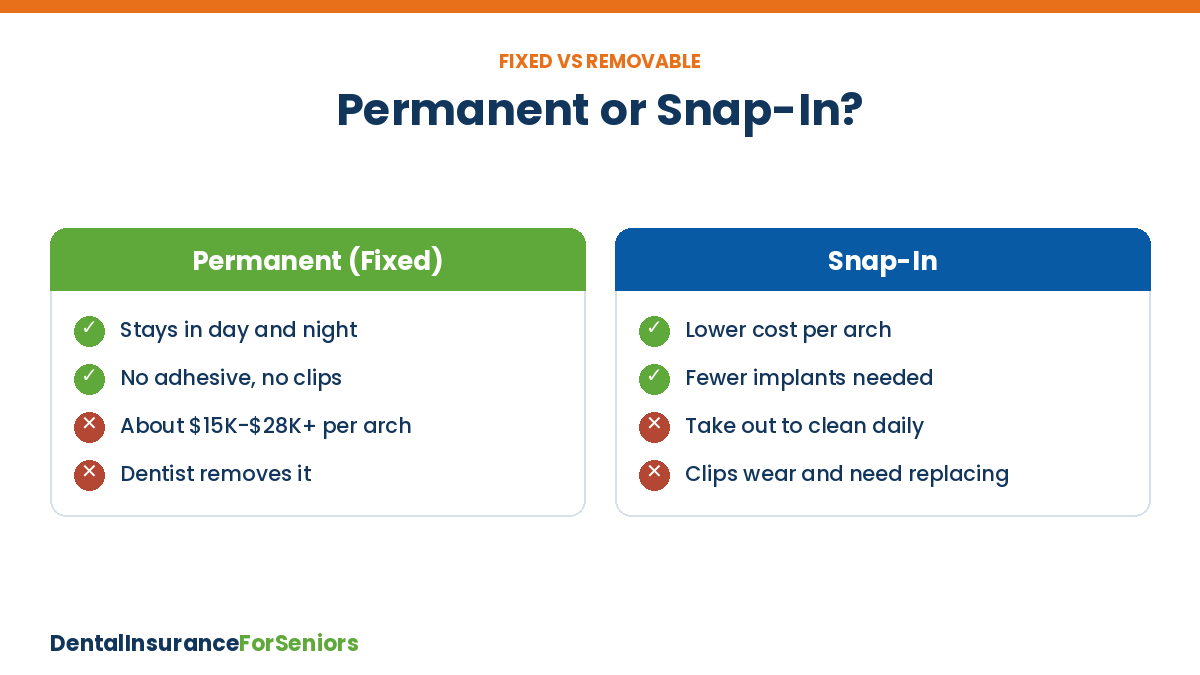
Permanent dentures cost and daily life compared with snap-in dentures for seniors

A permanent denture is fixed, not removable. The teeth are attached to several implants in the jaw, usually four to six per arch, and only a dentist can take the bridge off for a checkup or repair. That is the key difference from a snap-in denture, which you unclip and clean at the sink each night.

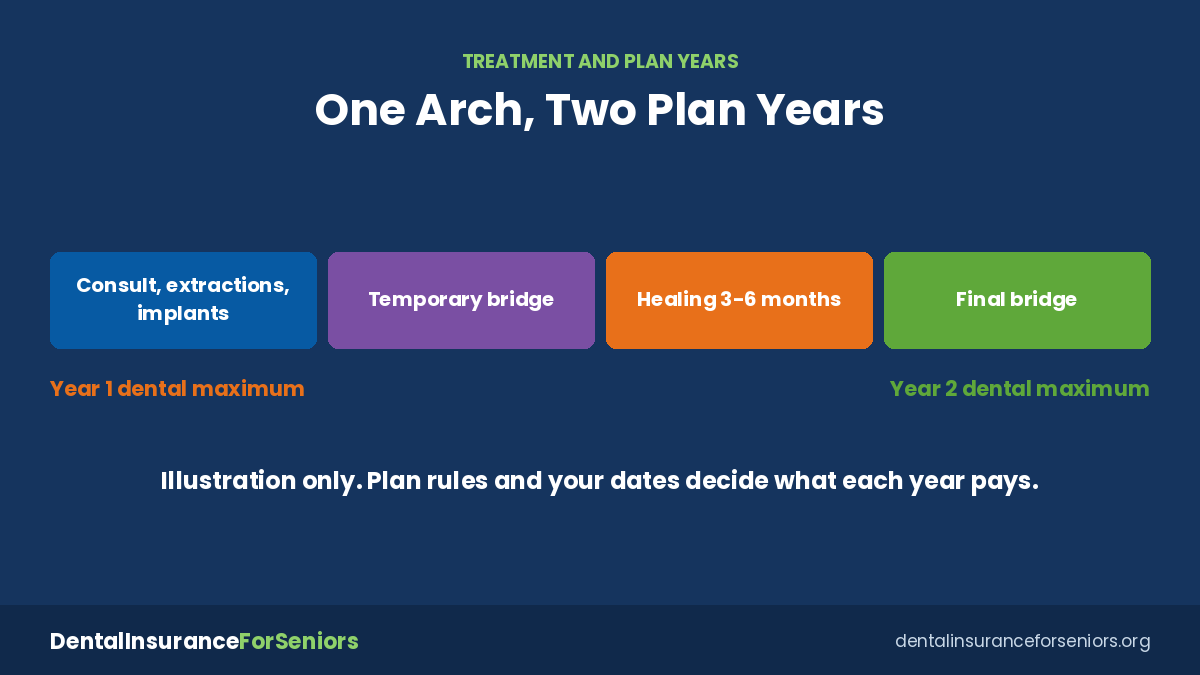
Temporary set first. Most patients wear an interim acrylic bridge while the implants fuse with the bone. Implant-supported teeth often need about three to six months of healing before the final bridge is made.

Final bridge second. The permanent set is made once healing is done. It is usually acrylic teeth on a metal frame (a hybrid) or a solid zirconia bridge.

Not for everyone. Enough jawbone and good overall health matter more than age. Uncontrolled diabetes, smoking or bone loss can change the plan and the price.

Senior Dental Insurance Quotes

Call a Licensed Agent Now

Compare dental plans for seniors and people on Medicare from several insurance companies in one call.

☎ 1-855-425-2095

TTY users 711  |  Mon–Fri: 8am–9pm ET

No obligation to enroll

Permanent Dentures Cost: Price Ranges Per Arch and Full Mouth

These are national ranges from dental cost guides published in 2025 and 2026. Your quote can land outside them depending on your city, the provider and how much prep work your mouth needs.

What you are pricingTypical published rangeWhat moves it
Fixed denture, one arch (all materials)About $15,000 to $28,000Average near $21,500 in one guide
Acrylic hybrid bridge, one archAbout $15,000 to $25,000Lower cost, easier to repair
Zirconia bridge, one archAbout $25,000 to $38,000Harder, resists stains and wear
Upper and lower archesAbout $30,000 to $70,000+Material and number of implants
Tooth extraction, eachAbout $200 to $700Surgical vs. simple removal
Bone graft, each siteAbout $350 to $1,000Common after years without teeth

Ranges from published estimates by NewMouth and RealDentalCosts. Not a quote; fees vary widely by provider and area.

Quote check: Advertised prices around $10,000 to $16,000 per arch often cover only the temporary bridge. The final permanent bridge, extractions and sedation may be billed on top. A written estimate should list the final bridge material, the number of implants, and every add-on by name.

Permanent vs. Snap-In vs. Conventional Dentures Over the Years

The upfront price is only part of the story. Upkeep and how often each option must be redone shape the real cost over 20 years or more.

FeaturePermanent (fixed)Snap-in (removable)Conventional
Typical cost per arch$15,000 to $28,000+A few thousand to about $18,000About $1,000 to $3,000
Implants per archUsually 4 to 6Usually 2 to 4None
Who takes it outDentist onlyYou, dailyYou, daily
Regular upkeepProfessional cleanings around the bridgeClips or liners replaced every 1 to 2 yearsRelines as gums shrink
When it needs redoingAcrylic bridge often refurbished after 10 to 15 yearsDenture remade over time; implants stayOften replaced every 5 to 8 years

Compiled from published dental cost guides (NewMouth, RealDentalCosts, The Senior List) and Aspen Dental patient materials. Ranges vary by provider.

A conventional denture costs the least up front, but replacements add up; our page on how much dentures cost walks through that long-run math. For replacing single teeth rather than a whole arch, see how much dental implants cost, and for individual implants across the whole mouth, see full mouth dental implants cost.

How a Dental Plan Reads a Permanent Denture Claim

Permanent dentures cost timeline showing treatment steps spread across two dental plan years

Dental offices bill a fixed denture under its own procedure codes: D6114 for the upper arch and D6115 for the lower, plus separate codes for each implant, extraction and graft. Asking for these codes on the estimate lets you or a family member check the plan’s coverage line by line before any surgery.

The alternate benefit rule. Some plans pay only what a less costly treatment would cost, such as a regular denture, even when you choose implants. You pay the difference. Not every plan has this rule.

The yearly maximum. Senior dental plans often cap benefits at about $1,000 to $2,000 a year. On a five-figure bill, that cap matters far more than a 50% coverage rate.

Waiting periods and missing-tooth rules. Major work is often excluded for 6 to 12 months or longer, and some plans will not replace teeth lost before coverage began. See dental implant insurance waiting periods.

Before signing: A predetermination (pre-treatment estimate) sent to the plan shows in writing which codes it will pay and at what amount. It does not guarantee payment, but it exposes alternate benefit limits before the work starts.

Find & Compare Plans Online

Speak with a licensed insurance agent

1-855-425-2095TTY 711

Mon-Fri: 8am-9pm ET

Where Medicare and Medicare Advantage Fit In

Original Medicare (Parts A and B) does not pay for dentures or dental implants, fixed or removable. Medicare Supplement (Medigap) plans do not add dental coverage either, since they only follow what Original Medicare approves.

Medicare Advantage dental varies. Many Medicare Advantage plans include dental benefits, and some list implants or fixed prosthetics. Coverage, networks and dollar limits vary by plan and area, so read the Evidence of Coverage for the plan you are considering.

Small caps against a big bill. KFF found the average yearly dental limit in Medicare Advantage plans with extensive dental benefits was about $1,300 in 2021, and most of those enrollees had a cap of $1,000 or less. That covers a small part of one arch.

Benefits reset each year. Dental limits usually start over each January, so timing treatment across two plan years may let you use two years of benefits. Read more in does Medicare Advantage cover dental implants.

Paying for Permanent Dentures on a Fixed Income

1

Do one arch at a time. Many people start with the arch that bothers them most. This spreads the cost and may let two plan years of benefits apply.

2

Use HSA savings already set aside. Once you enroll in Medicare you can no longer add money to a health savings account, but you can still spend the existing balance tax-free on qualified dental costs such as implants and dentures.

3

Get two or three written estimates. Compare the same items: number of implants, bridge material, and whether the final bridge is included.

4

Read financing terms closely. Office payment plans and medical credit cards can spread payments, but deferred-interest offers can charge back interest if the balance is not paid in time.

For adult children: Helping a parent compare options works best with the written estimate, the dental plan’s policy and the Medicare Advantage Evidence of Coverage side by side. The codes, the yearly maximum and any alternate benefit rule decide the parent’s real share.

Bottom Line

Permanent dentures usually cost $15,000 to $28,000 or more per arch, with zirconia and add-on procedures at the top of the range. Dental plans and Medicare Advantage help only up to their yearly caps, and Original Medicare does not pay. An itemized estimate, a check for alternate benefit rules and smart timing across plan years can lower your share.

Check senior dental plans & rates by ZIP code

Permanent Dentures Cost — Frequently Asked Questions

➤ How much do permanent dentures cost for one arch?

Published estimates commonly range from about $15,000 to $28,000 per arch before insurance. A zirconia bridge can run about $25,000 to $38,000, and extractions or grafts add more.

➤ Are permanent dentures the same as All-on-4?

Mostly, yes. All-on-4 is one popular way to anchor a fixed full-arch denture on four implants. Some patients need five or six implants, often called All-on-6 or All-on-X, which can cost more.

➤ Why does a zirconia bridge cost more than acrylic?

Zirconia is a hard ceramic that resists chipping, staining and wear, and it takes more lab work. Cost guides put the gap at roughly $5,000 to $13,000 per arch.

➤ What might a low advertised price leave out?

Many low headline prices cover only the temporary bridge. The final bridge, extractions, bone grafts, scans and sedation may be billed separately, so ask for an itemized written estimate.

➤ Will dental insurance pay its full share toward a fixed denture?

Not always. Some plans use an alternate benefit rule and pay only what a regular denture would cost. Yearly maximums, often $1,000 to $2,000, also limit what any plan pays.

➤ Can a Medicare Advantage plan help with permanent dentures?

Some Medicare Advantage plans include dental benefits that may help with implants or fixed dentures, but coverage varies by plan and area. Most have a yearly dollar limit that covers only part of the cost.

➤ Can I use my HSA for permanent dentures after I join Medicare?

Yes, you can spend money already in a health savings account on qualified dental expenses. You just cannot add new contributions once your Medicare coverage starts.

➤ How long do permanent dentures last before they need work?

The implants can last for decades with good care. An acrylic bridge is often refurbished or replaced after about 10 to 15 years, while zirconia usually lasts longer.

Senior Dental Insurance Quotes

Call a Licensed Agent Now

Compare dental plans for seniors and people on Medicare from several insurance companies in one call.

☎ 1-855-425-2095

TTY users 711  |  Mon–Fri: 8am–9pm ET

No obligation to enroll

Find & Compare Plans Online

Speak with a licensed insurance agent

1-855-425-2095TTY 711

Mon-Fri: 8am-9pm ET

ZRN Health & Financial Services, LLC, a Texas limited liability company