



Reviewed by Russell Noga, Licensed Insurance Broker — Last updated November 21, 2026
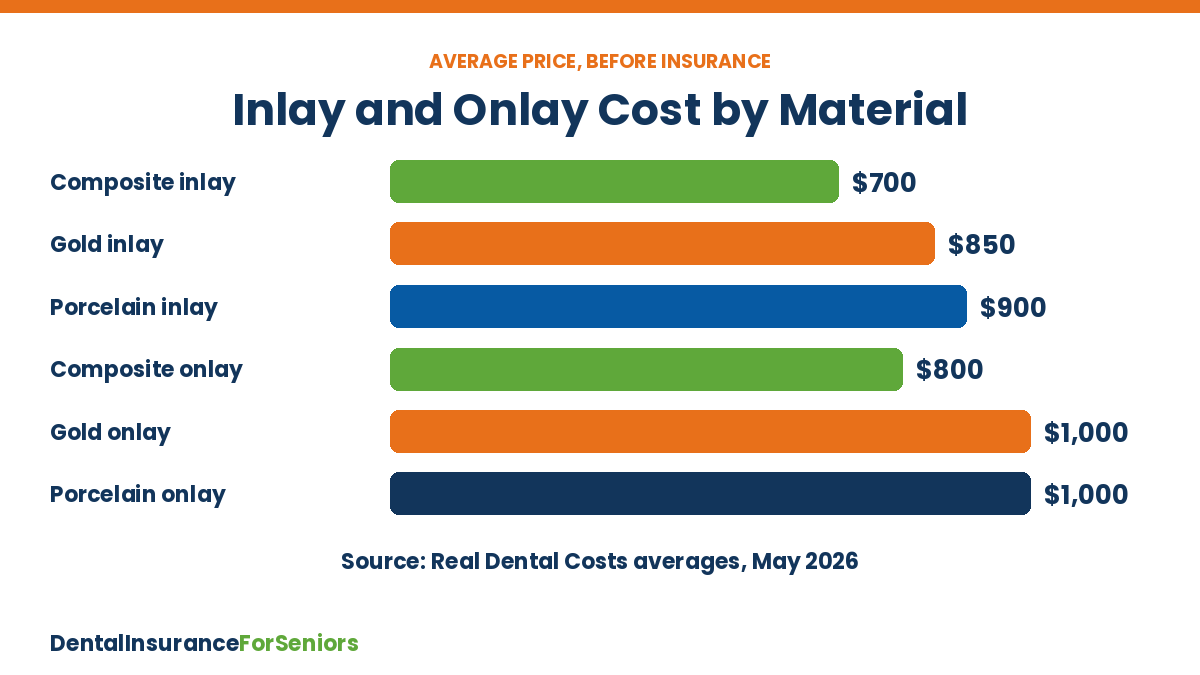
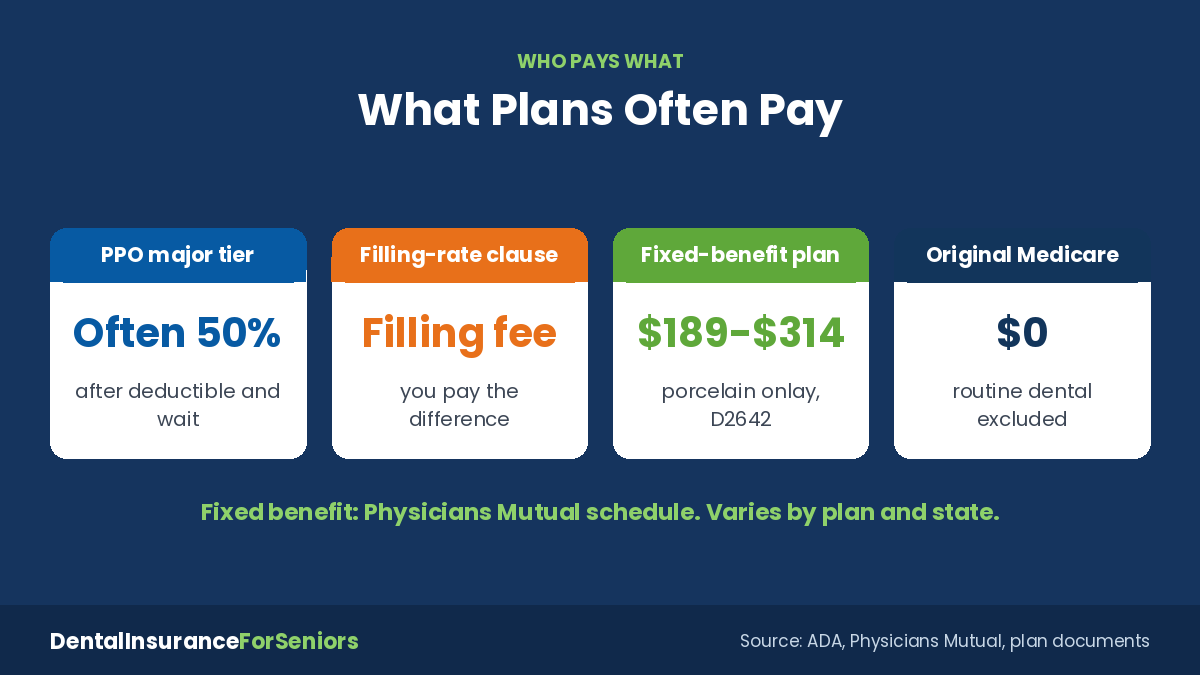
An inlay or onlay usually costs about $500 to $1,500 per tooth before insurance, and the Pearl cost guide puts the national average near $975 based on ADA fee survey data. Composite is often the lowest-priced material, porcelain sits in the middle, and gold quotes vary widely. Many dental plans pay these as major care, often at 50%, and some pay only what a regular filling would cost.
2027 by the Numbers
$975
national average inlay or onlay, before insurance (Pearl cost guide, ADA fee survey data, May 2026)
$635-$1,665
typical national range for an inlay or onlay (same source)
18
separate CDT codes for inlays and onlays, by material and number of surfaces (ADA code set)
Many people over 65 carry a mouth full of large silver fillings placed in the 1970s and 1980s. As those fillings age, the tooth around them can crack or wear thin. When too much tooth is gone for another filling but enough is left that a full crown seems like overkill, a dentist may suggest an inlay or an onlay.
Both are made outside the mouth, usually in a lab, and then bonded into the tooth. An inlay fits inside the cusps, the raised points on a back tooth. An onlay covers one or more cusps. This guide prices each material, lists the billing codes, and explains the plan rule that most often shrinks the claim. For smaller repairs, see dental filling cost.