



Missing Tooth Clause: What It Means for Seniors Buying Dental Insurance

Reviewed by Russell Noga, Licensed Insurance Broker — Last updated November 20, 2026

A missing tooth clause is a dental insurance rule that refuses to pay for a bridge, partial, denture or implant that replaces a tooth lost or pulled before the policy started. Individual plan documents from Humana, Mutual of Omaha, Physicians Mutual and Aetna Dental Direct all carry a version of it, while Delta Dental of Iowa’s individual plans cover long-missing teeth after a 12-month wait.

By retirement, many people have an old gap somewhere, often a back molar that was never replaced. That gap is exactly what this clause targets: a new policy may pay for cleanings and fillings yet nothing toward the bridge or partial for a space that existed on the enrollment date.

This page covers only that rule: the wording carriers use, how it differs between companies, and how to shop around it. Broader health-history questions are covered in dental insurance for pre-existing conditions.
Compare Senior Dental Plans for Missing Teeth

What the Clause Excludes, and Why the Gap at 70 Matters

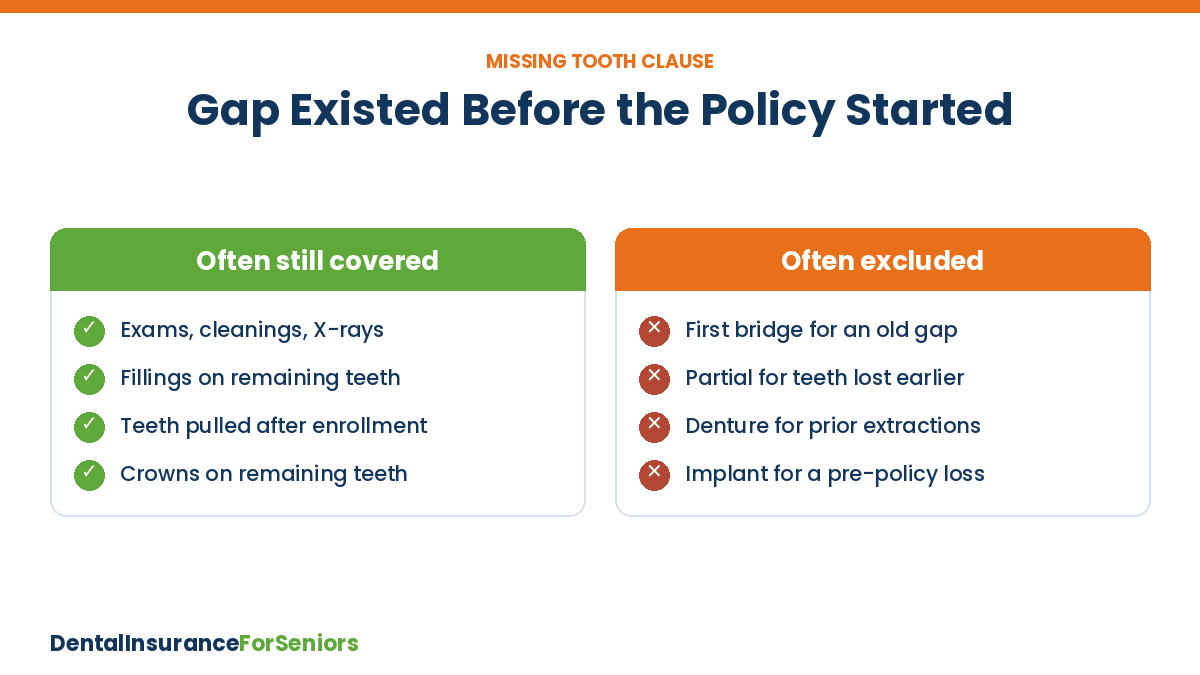
Missing tooth clause: replacements that are excluded versus work that may still be covered

The clause is tied to a date, not a diagnosis. If the extraction happened before the policy’s effective date, the first appliance filling that space is excluded, however long the policy has been in force. Most individual plans ask no dental health questions, so this rule is how carriers avoid paying for replacements already needed at sign-up.

Bridges. The false tooth and the crowns on the anchor teeth count as one excluded replacement.

Partials and dentures. A removable appliance for teeth pulled years ago falls under the same rule.

Implants. Spirit Dental’s implant guide says the natural tooth must be removed while the policy is in force.

Separate exclusions. Wisdom teeth and teeth that never formed are usually excluded by their own lines.

Why it lands hardest after 65: Someone leaving employer coverage at retirement may carry several old gaps into a new individual plan, and every one of them predates the new policy.

Senior Dental Insurance Quotes

Call a Licensed Agent Now

Compare dental plans for seniors and people on Medicare from several insurance companies in one call.

☎ 1-855-425-2095

TTY users 711  |  Mon–Fri: 8am–9pm ET

No obligation to enroll

Carrier Wording on Teeth Lost Before Coverage, Side by Side

No carrier publishes a comparison like this, so each row comes from that company’s own individual plan papers. The wording differs more than most buyers expect.

Plan and document checkedTeeth lost before coverageFine-print detail
Humana Loyalty Plus, Utah individual summaryNot coveredSame plan states no waiting periods on preventive, basic or major care
Humana Extend 5000 (plan FAQ on a licensed seller’s site)Not coveredNoted as able to vary by state and plan
Mutual of Omaha individual dental, outline of coverageFirst denture or bridge excluded when all the teeth were lost while not coveredOne tooth pulled while insured can change the answer
Physicians Mutual, covered-procedures listInitial bridge or denture paid only when the extraction happened during coverageImplants may qualify, subject to the same extraction provisions
Aetna Dental Direct, individual brochureFirst bridge or denture covered only for teeth removed while the policy was in forceImplants are listed as not covered
Ameritas individual exclusions sheetInitial prosthesis excluded unless the extraction happened while coveredNew York version omits this exclusion; a pulled wisdom tooth never qualifies
Delta Dental of Iowa individual plans (member FAQ)Covered after a 12-month waitWait waived with employer coverage in the prior 60 days or proof of credible coverage
Guardian Advantage Core and Diamond exclusion listsNo general exclusion listedLists name only missing wisdom teeth and teeth that never formed

Compiled from carrier documents and member FAQs, checked November 2026. Terms vary by state and can change; confirm in the policy for your state before buying.

Three Details That Change Whether a Claim Gets Paid

The clause is not one fixed rule. Three details decide how much it costs a retiree.

It is separate from the waiting period. Humana’s Utah Loyalty Plus plan and Spirit Dental both promote no waiting periods, yet both exclude replacing teeth gone before enrollment.

Usually only the first appliance is blocked. Mutual of Omaha, Aetna and Physicians Mutual word it as the first or initial placement. Later replacements fall under the usual replacement limits.

One new extraction can reopen coverage. Mutual of Omaha excludes the first denture only when every tooth it replaces was lost while uninsured, and Ameritas and Physicians Mutual require the appliance to include the tooth pulled while covered.

Ask before the extraction: When a failing tooth sits next to an old gap, a pre-treatment estimate shows whether one appliance replacing both will be paid. Get the carrier’s answer in writing.

Finding the Clause in a Policy: Exact Phrases to Search For

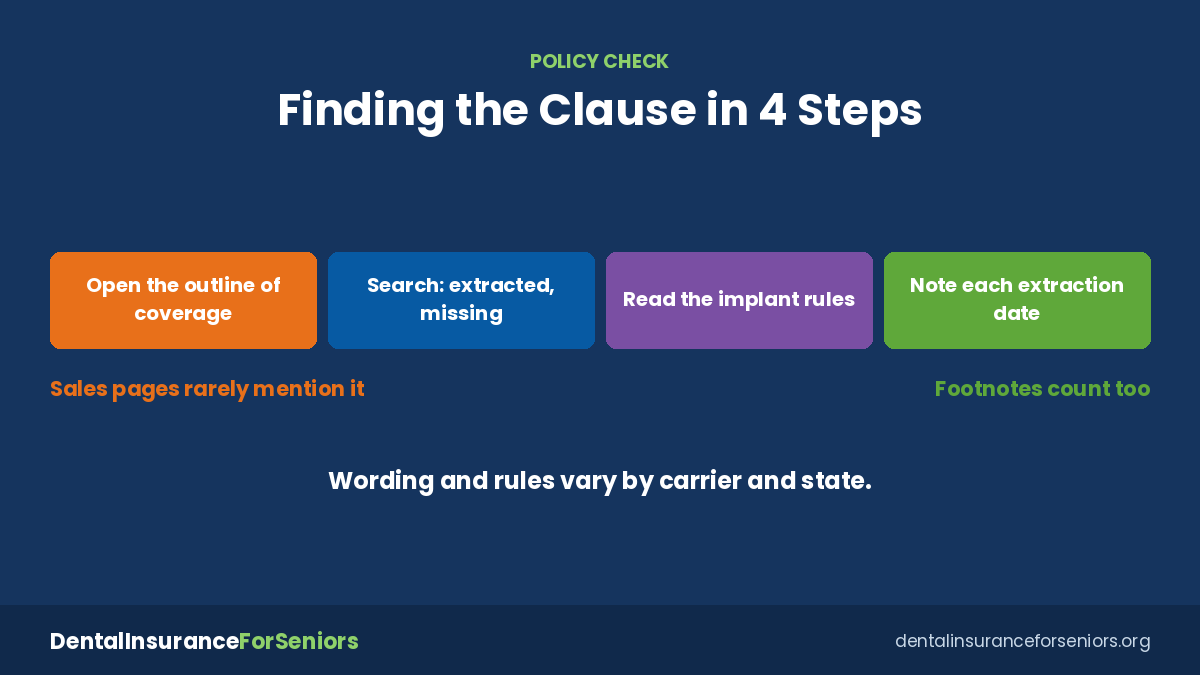
How to find the missing tooth clause in a dental policy in four steps

Few documents use the words missing tooth clause. The rule usually sits under exclusions and limitations, in language like the phrases below. Searching the PDF for the word extracted finds most versions.

Phrase in the documentWhere it usually appearsWhat it means for an old gap
extracted prior to coverageNotes under the benefit chartReplacement is excluded outright
lost while the person was not coveredExclusions listExcluded, unless at least one tooth was lost while insured
removed while this policy was in forceProsthetics or major services rulesPaid only for teeth pulled after the start date
initial placement or first installationProsthodontic limitationsApplies to the first bridge or denture only
missing for some time, waiting periodMember FAQ or waiting period sectionCovered once the stated wait is met

Wording quoted from Humana, Mutual of Omaha, Aetna, Physicians Mutual and Delta Dental of Iowa documents.

1

Open the outline of coverage, not the sales page. The state-filed outline or exclusions sheet carries the rule; marketing pages rarely do.

2

Search for extracted, missing and initial placement. Read every sentence with those words, including footnotes under the benefit chart.

3

Check implant rules separately. Some plans cover implants under their own limits; Aetna Dental Direct does not cover them.

4

Note each extraction date. Dental records can confirm when each tooth came out if a claim is questioned.

Find & Compare Plans Online

Speak with a licensed insurance agent

1-855-425-2095TTY 711

Mon-Fri: 8am-9pm ET

Workarounds When Teeth Are Already Missing

A clause in one plan does not close every door. These routes fit someone entering retirement with gaps already in place.

Plans that wait instead of exclude. Delta Dental of Iowa’s individual plans pay toward bridges or dentures for long-missing teeth after 12 months. Delta Dental of New Jersey adds a Missing Tooth Inclusion to its employer plans, so retiree group coverage is worth checking.

Plans whose exclusions omit the rule. Guardian’s Advantage exclusion lists do not name teeth lost before coverage; read the state policy before counting on it. See dental plan waiting periods for the waits that still apply.

Discount plans. A savings plan is not insurance, so there is no exclusion to trigger, only reduced fees at participating dentists. See discount dental plans for seniors.

Medicare Advantage dental. Some plans include dental benefits, but bridge and denture coverage, and any rule on teeth lost before enrollment, vary by plan and area. Compare Medicare Advantage plans with dental benefits.

Buying Steps for Someone Who Already Has Gaps

1

Count and date the gaps. A plan with the clause helps only with teeth pulled after enrollment.

2

Get a written treatment plan. It shows whether the main need is filling old gaps or keeping current teeth healthy.

3

Sort plans into three groups. Clause with no end date, clause lifted after a wait, and no clause listed.

4

Compare the yearly cap too. Annual maximums are often $1,000 to $2,000, and one bridge can use that up.

5

Keep current coverage until the new plan is confirmed. Some carriers waive waits only with proof of recent prior coverage.

For adult children helping a parent: A plan that pays well for fillings and crowns can still make sense when old gaps will be filled with a lower-cost partial paid out of pocket. Bridge coverage rules are compared in dental insurance for bridges.

Bottom Line

The missing tooth clause stops many senior dental plans from paying for the first replacement of a tooth lost before enrollment, even on some plans with no waiting period. Some plans cover old gaps after a wait or do not list the exclusion, so the exclusions page is the place to check before buying.

See which plans in your ZIP code cover teeth already missing

Missing Tooth Clause — Frequently Asked Questions

➤ Does every dental insurance plan have a missing tooth clause?

No. Many individual senior plans include one, but some lift it after a wait, such as Delta Dental of Iowa’s individual plans at 12 months, and some exclusion lists omit it.

➤ Does the clause apply if my tooth was pulled a week before the policy started?

Yes, on most plans that carry it. Only the extraction date matters, so scheduling a needed extraction after coverage begins can keep the later replacement eligible.

➤ Will the plan pay for the extraction itself?

The clause targets the replacement, not the removal. A simple extraction is often a basic service, while the bridge or denture that follows can still be excluded.

➤ Do I have to list missing teeth on the application?

Most individual plans ask no dental health questions. The clause is applied at claim time, when X-rays and records show when the tooth was lost.

➤ Does the clause ever expire?

On some plans. Delta Dental of Iowa’s individual plans state a 12-month wait for replacing long-missing teeth, while Humana’s Utah Loyalty Plus plan states the exclusion with no end date.

➤ Is a missing tooth clause the same as a waiting period?

No. A waiting period delays a type of service; the clause excludes replacing specific teeth based on when they were lost. A plan can have one, both or neither.

➤ What if I switch from one dental plan to another?

Teeth lost under the old plan count as missing before the new one began. A prior-coverage waiver of waiting periods does not always remove the clause, so check the new exclusions.

➤ Does Medicare Advantage have a missing tooth clause?

It depends on the plan. Dental benefits vary by plan and area, and any rule about teeth lost before enrollment appears in the plan’s Evidence of Coverage.

Senior Dental Insurance Quotes

Call a Licensed Agent Now

Compare dental plans for seniors and people on Medicare from several insurance companies in one call.

☎ 1-855-425-2095

TTY users 711  |  Mon–Fri: 8am–9pm ET

No obligation to enroll

Find & Compare Plans Online

Speak with a licensed insurance agent

1-855-425-2095TTY 711

Mon-Fri: 8am-9pm ET

ZRN Health & Financial Services, LLC, a Texas limited liability company